Tesla and Shopify: Integration, Modularity, and Value Capture

This is a follow-up on my recent posts on Shopify and Tesla. It occurred to me that there’s an interesting connection worth making between these two companies, and it has to do with their strategic choices around modularity in the case of Shopify and integration in the case of Tesla.
Tren Griffin replied to my post on Twitter and made the connection I should have made: that Tesla’s relentless desire for vertical integration is a way of avoiding what Griffin calls “wholesale transfer pricing”.
The easiest way to understand wholesale transfer pricing is to consider a fancy local restaurant that is inordinately successful. When its lease is up for renewal the landlord, noticing the restaurant’s success, will increase the rent just below the threshold at which the restaurant will consider moving.
The landlord is a supplier of real estate to the restaurant, and Michael Porter calls this the bargaining power of suppliers, whereas John Malone calls it wholesale transfer pricing since the pricing power of the restaurant is being transferred, wholesale, to one of its suppliers.
The way to avoid this situation is to have more than one supplier for a critical resource—impossible in the case of real estate—or to vertically integrate into that resource. In the example Griffin cites, the restaurant decided to vertically integrate and raised money from outside investors so that it could own its real estate rather than rent it and be subjected to wholesale transfer pricing.
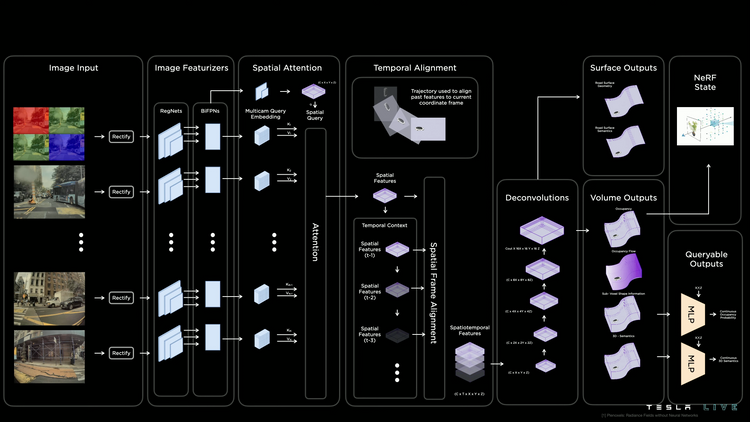
Tesla, as I explained, has decided to vertically integrate into many of its key resources including factory building, its ERP system, and the chips used for machine learning, to name a few.
Shopify, on the other hand, has outsourced nearly everything. Its payment processor is Stripe; its buy now, pay later supplier is Affirm; cross-border ecommerce is handled by Global-E; and of course, Shopify has ceded the monetization of software to its ecosystem of partners, who now earn the lion’s share of software profits through the various apps that plug into Shopify to provide basic functionality like analytics or subscription management. As a result, Shopify went to earning most of its gross profits from software to earning most of them from payments.
Yesterday there were two pieces of news for both Tesla and Shopify that reinforced these points.
The Information reported that Tesla is building its own recruiting software and ditching supplier Avature as a result. Employees were quoted as being happy with the change, since it will consolidate a number of tasks in once place. The article also noted that Tesla moved away from Salesforce in 2019. This is also noteworthy since large companies tend to love Salesforce for its flexible, programmable and dominant CRM system. Salesforce itself is a company that has chosen the vertical integration route, acquiring visualization tool Tableau and collaboration app Slack among many others.
Shopify, on the other hand, issued a press release announcing another partnership, this time with email provider Klaviyo. It’s old news that the best email provider for Shopify is Klaviyo; this has been true since at least when Shopify and Mailchimp broke up. At the time, I was optimistic that this meant that Shopify was ready to launch its own internal Mailchimp competitor. As I explained yesterday, there is no way that Shopify’s valuation made any sense unless it increased its take rate, or the amount of money it earns for every dollar of gross merchandise value it processes. And one way to increase take rate is to solve hard problems, like email marketing.
Instead, Shopify outsources; I’m not sure what Shopify is getting for its $100 million investment in Klaviyo, given that it integrates with Shopify competitors Magento, BigCommerce and WooCommerce. Perhaps this is Shopify’s business development department putting some money to work expecting to earn a return once Klaviyo goes public, as Shopify did with Affirm and Global-E.
But the bigger question is one of business strategy.
One way to summarize this dichotomy between Tesla and Shopify in an equation would be “Solve hard problems = capture value.”
Shopify has chosen to let others solve its hard problems. It wasn’t obvious: it broke up with Mailchimp in 2019, perhaps as a precursor to vertically integrating email. In the same year it also announced, to great fanfare, the Shopify Fulfillment Network. More vertical integration! But of course, it was not to be. In hindsight, this quote from a recent Brad Stone article was the perfect tell:
To observers it appeared Lütke was ready to buy warehouses, employ blue-collar workers, and start moving pallets and packages around the real world.
But it hasn’t happened, and Shopify still largely leaves the last mile to its merchants. In January 2021 it hired an operations executive from Amazon named Nitin Kapoor—who left after nine months. (Kapoor declined to comment.) Lütke says logistics “is a tough nut to crack for byte companies”—meaning firms that have gotten comfortable writing software, with none of the headaches of employee injuries and high-profile union campaigns. If a ruthless, Amazon-style efficiency is required to run such a network, Lütke says, “then I don’t think we’re going to succeed. We’ll do it differently, because we don’t want to show up like this.”
Is Shopify even a “byte company” anymore, now that 60 percent of its gross profits come from payments? I would argue that Tesla is more of a software company than Shopify. Here’s Elon Musk on Tesla’s Q3 2020 earnings call:
We are not dependent on enterprise software. Like for those who understand what this means, this is a very big deal. And my hat is off to the great work of the internal applications team. They are like the nervous system, the operating system of the company, the Tesla operating system, extremely fundamental.
Obviously, insurance is substantial. So insurance could very well be, I don't know, 30%, 40% of the value of the car business, frankly. And as we've talked about before, with a much better feedback loop, instead of being statistical, it can be specific. And obviously, somebody does not have to choose our insurance. But I think a lot of people will. It's going to cost less and be better, so why wouldn't you?
And the whole autonomy thing is a start-up. The computer chip was—designing our computer chips was a start-up. Obviously, cells are a start-up. Designing and making our own power electronics for the drive units, designing, manufacturing our own motors. Chargers, the Supercharger network is a start-up. The thing, I think, that people just don't really understand about Tesla is that it's a whole chain of start-ups. And they're like, well, you didn't do that before. Yes, but we're doing it now.
If there’s one person who likes to solve hard problems, it’s Elon Musk. Landing reusable rockets on foldable legs on drone ships in the middle of the ocean sounds pretty hard. Is it any wonder that Musk’s companies have captured an enormous amount of value and made him the world’s wealthiest man?
This is why I was surprised to hear Lütke, on Shopify’s Q1 earnings call, extol the virtues of Amazon’s “Buy with Prime” which, as I explained, is a deadly weapon aimed at the heart of Shopify’s monetization engine:
We are actually thrilled with Amazon making a decision to take the amazing infrastructure that they've built because they have a second to none infrastructure and want to share this broadly with small merchants across the Internet. And so we are happy to integrate this into Shopify, just in the same way how we integrated what—the infrastructure that Meta built, the infrastructure that Google built and the infrastructure that TikTok built and so on. So this fits perfectly into our world view. And it's not nearly as zero-sum as some people make it out to be. Whatever is good for merchants is—that will cause more entrepreneurship, which is exactly—helps the vision of a company.
But the mistake was mine. I assumed this was a diplomatic statement; something Lütke had to say in public, while privately steeling his resolve to accelerate the roadmap and launch Shopify’s own fulfillment solution.
Now, I’m not so sure. I think my interpretation was wrong, and that instead, Lütke was sincere, perhaps even relieved, that Amazon is acting as yet another module that plugs into Shopify and solves hard problems on its behalf.
This all seems like a very deliberate strategic choice that Shopify has made: it will be the conduit and enabler of more entrepreneurship, and let a thousand flowers bloom, by allowing others to capture most of the value.
From the lens of Lütke the entrepreneur, this is an enormous success.
But from the lens of the public market shareholder evaluating Shopify at a market cap of $48 billion, it’s another story entirely. Even if we granted Shopify its peak 18 percent free cash flow margin on this year’s estimated revenues, at a 25x earnings multiple the stock would be priced 36 percent lower than the current price of $38—and that’s after a 73 percent decline this year.
And the path forward, the upside for shareholders, will be severely curtailed if Shopify’s ambitions are merely to be a conduit for the wholesale transfer pricing—for the actual monetization and pricing power—to be exercised by its various partners and its developer ecosystem. Put simply, by not solving the hard problems itself, Shopify won’t capture that value in its earnings.
Atlassian’s Mike Cannon-Brookes put it best: “You don’t want to invest in growth companies, you want to invest in companies that are growing their ambition.”
And it sounds like Shopify gave up its ambition for value capture a long time ago.